The Grocery Store Trip Isn’t Going Away
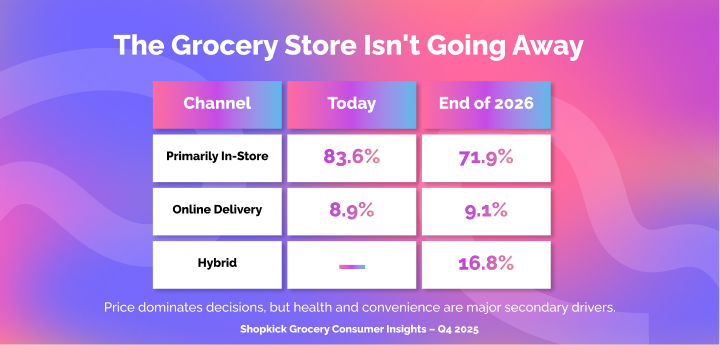
83.6% of shoppers still buy groceries primarily in-store, and nearly 72% expect to continue by the end of 2026.
Introduction
Grocery shopping is evolving, but not in the way many predicted.
While digital commerce continues to grow, the majority of grocery decisions still happen inside physical stores.
For brands, this means the most important moment in the shopper journey remains the same: at the moment of truth, the aisle.
To understand how grocery behavior is changing, we surveyed nearly 3,000 consumers about how they plan to shop in 2026.
The results reveal five key trends that will shape grocery retail in the coming year.
Download the infographic: The 2026 Grocery Shopper Journey to explore the full data story.
Trend 1: The Grocery Store Still Dominates
Despite years of predictions about the rise of online grocery, the store remains central to the shopping experience.
- 83.6% of consumers currently shop primarily in-store
- 71.9% expect to continue doing so by the end of 2026
Most consumers still prefer to browse shelves, compare options, and discover new products while shopping in person.
For brands, this means the store aisle remains the most influential environment for product discovery and purchase decisions.
Trend 2: Price Sensitivity Is the New Normal
Economic uncertainty continues to shape how shoppers approach grocery spending.
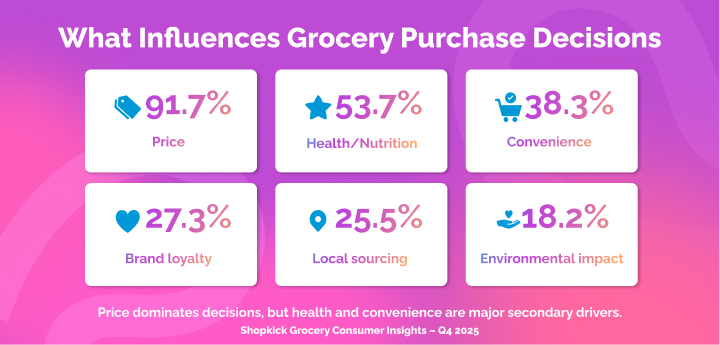
91.7% of shoppers say price influences grocery purchases
But price is not the only factor:
- 53.7% consider health and nutrition
- 38.3% value convenience
Consumers are weighing multiple priorities, but value remains the deciding factor.
Brands that can offer incentives, rewards, and clear value will be better positioned to win at the shelf.
Trend 3: Consumers Are Actively Changing Behavior
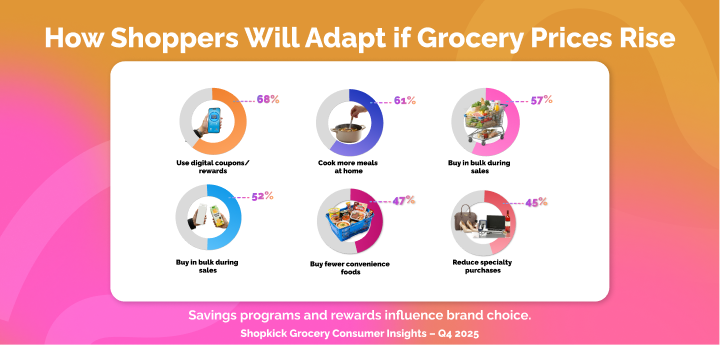
As grocery prices rise, shoppers are adapting how they shop.
- 68% will use more digital coupons or rewards
- 61% will cook more meals at home
- 57% will buy in bulk during sales
- 52% will switch to store brands
These behaviors signal a shift.
Consumers are not passive. They are actively adjusting and refining how they shop.
Rewards, promotions, and savings programs are becoming important drivers of brand choice.
Trend 4: Health and Wellness Remain a Priority
Even as consumers become more price-sensitive, health remains a key driver of grocery decisions.
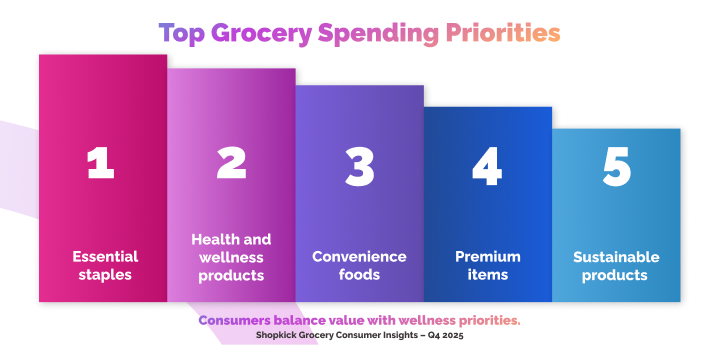
Health and wellness products rank as the second most important grocery spending category, behind essential staples.
This reflects a balance.
Consumers want to save money, but not at the expense of their health.
Brands that clearly communicate product benefits at the shelf can influence decisions in this moment.
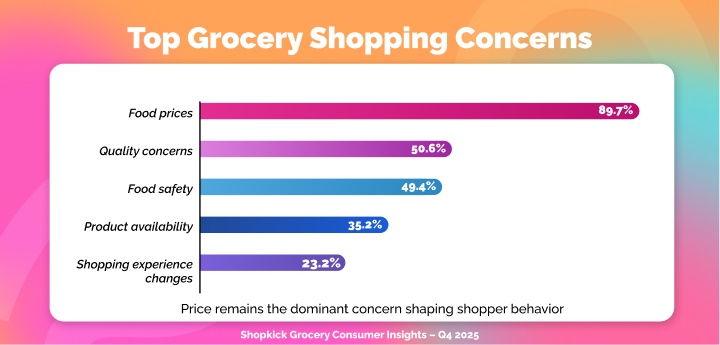
Trend 5: Price Pressure Is Driving Concern and Behavior
Consumers are not just adjusting their behavior. They are increasingly concerned about the grocery experience.
- 89.7% cite food prices as a top concern
- 50.6% worry about quality
- 49.4% are concerned about food safety
This reinforces a clear reality.
Price is not just a factor. It is the primary lens shoppers use to evaluate purchases.
Conclusion
The brands that succeed in 2026 will be those that understand the full shopper journey.
Not just what shoppers buy, but how they:
- Discover products
- Evaluate options
- Choose what goes in their basket
At a time when price sensitivity is rising and loyalty is more fluid, influencing the shopper at the right moment matters more than ever.
Shopkick helps brands capture those moments through deterministic in-store commerce signals, revealing how shoppers move from discovery to purchase in the real world.
Explore the Full Data
Explore the full data in our infographic:
The 2026 Grocery Shopper Journey
Understand how shoppers move from discovery to purchase and what influences decisions at each step.
Based on the Shopkick Grocery Consumer Insights Survey, Q4 2025.